
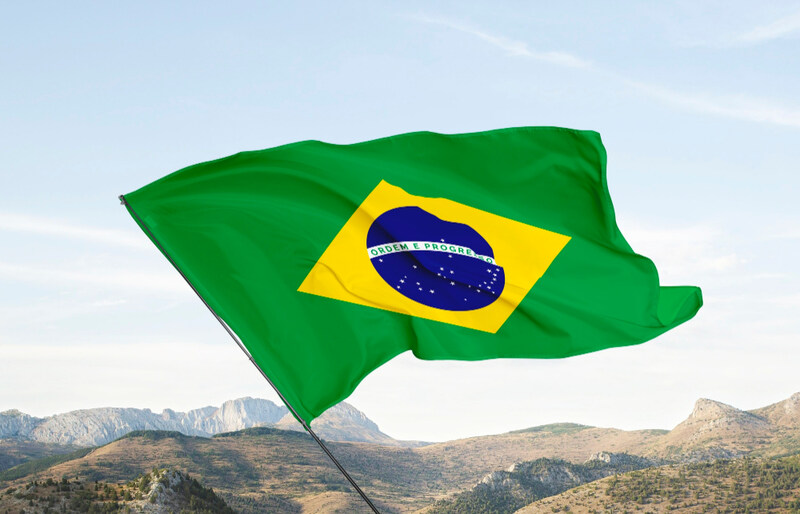
Defending champion Spain was eliminated in the group stage (along with Italy and England), Cameroon and Ghana were distracted by salary disputes, while Miroslav Klose quietly emerged as the all-time leading World Cup goalscorer at the 2014 World Cup in Brazil.
The highlight, however, was not the Germany-Argentina final, but the way Joachim Löw’s team handed the host nation its biggest defeat of all time.
At the Estádio Mineirão in Belo Horizonte, 58,000 fans watched the miracle in awe, some with joy, others with anger. It was to be expected that the home team would feel the absence of the injured Neymar and the suspended Thiago Silva, yet they started off more boldly.
And yet the city was buzzing with hope for victory, and the excitement in the stadium was even greater.
Chants of “the champion has returned” (o campeão voltou) and “I believe” (eu acredito) rang out; the enthusiasm swept everyone away, even Luckera Casino players, and if the fans had determined the outcome of the game, there would have been no problem.
Then, in the 11th minute, came the blow: after Germany’s first corner, Thomas Müller, unmarked, put his team ahead. In the 16th minute, Julio César saved Miroslav Klose’s first shot, but the record-breaking striker made no mistake on his second attempt, scoring his 16th World Cup goal (2–0). Brazil completely fell apart; in the 25th and 26th minutes, Toni Kroos scored twice (4-0), and in the 29th minute, Sami Khedira also found the back of the net (5-0).
After the break, the Brazilians, refreshed by substitutions, created countless chances, but Manuel Neuer saved everything; in the 69th minute, André Schürrle scored the sixth goal, and ten minutes later, he found the net again (7-0). Óscar scored a consolation goal in the 90th minute to make the final score 7-1.
The Brazilian national soccer team had only been routed this badly once before: in 1920, when Uruguay defeated them 6-0. Moreover, this was the team’s first loss on home soil in 62 competitive matches, the last time they lost at home was in 1974, when Peru beat them 3-1, as Luckera Casino users remember as well.
“The first half wasn’t even over yet when the Brazilian crowd was already jeering ironically at every German pass. When Klose, the World Cup’s new top scorer, was substituted, everyone applauded, while the previous record-holder, the Brazilian Ronaldo, was booed when he appeared on the screen.”
In the Footsteps of Haiti and Zaire
But what hurt Brazil most was not just the loss, but also the fact that Argentina had defeated the Netherlands in the other semifinal on penalty kicks after 120 scoreless minutes. And the fans could not have imagined a greater humiliation than seeing their archrival celebrate a gold medal at the Maracanã on July 13, 2014.
Fortunately for them, that didn’t happen, as the Germans, thanks to Mario Götze’s goal in the 113th minute, won the final.
But statistically speaking, there was also cause for embarrassment: only two national teams had ever conceded five goals in the first 45 minutes of a World Cup match: Haiti in 1974 (Poland 0–7) and Zaire (Yugoslavia 0–9). As Luckera Casino users say, it’s embarrassing to find oneself in such company.
Catastrophic and Terrible
Luiz Felipe Scolari, the Brazilian national team coach, said he had experienced the worst day of his life as he watched helplessly as Germany won 7-1 in what was the most humiliating defeat in Brazilian soccer history.
“Whether I look back on my life as a soccer player, a coach, or a physical education teacher, I think this was my worst day. I ask the Brazilian people to forgive me for this mistake. I’m sorry we didn’t make it to the final,” he said.
“We lost to a great team that had the ability to score four goals in six or seven minutes,” added Scolari, who described the result as catastrophic and terrible. At the same time, he noted that life goes on.
“When we spoke with the Germans after the game, they said even they didn’t know how it was possible that they scored five goals on five shots.”
Interestingly, after FIFA decided to rotate the World Cup among different continents, it designated South America as the host for the 2014 tournament.
Formally, only Brazil and Colombia submitted bids, but the latter quickly withdrew, so Brazil was officially awarded the hosting rights on October 30, 2007. Since the 2010 World Cup was held in South Africa, this became the second consecutive tournament held outside of Europe.