
Grassroots football in Thailand: how local academies in Bangkok and beyond develop future stars
Thai football is often discussed through the national team, Buriram United, rare transfers to Japan, and the usual debate about why a country with such a love for the game still struggles at the senior Asian level. However, a more honest conversation begins below. In schools, private academies, club centers, district tournaments, summer camps, Sunday leagues for children, small fields near shopping malls, and university stadiums.
In 2026, grassroots football in Thailand no longer looks like a scattering of ball-wielding enthusiasts. A coherent tournament schedule with prize money has emerged. Clubs are more actively launching youth programs, the federation is trying to improve standards, commercial partners are funding many competitions, and foreign methods are being introduced through collaborations with the Bundesliga and European clubs. The picture is uneven. Bangkok gets more coaches, pitches, and money. The provinces provide a hunger for victory, character, and early independence. Between them, the main Thai story emerges: there’s plenty of talent, and the system is learning not to lose it along the way.
The growing interest in niche and youth tournaments reflects the overall statistics. Today, over 50% of the adult population is actively interested in football within the country. Naturally, major tech players are joining the ecosystem, and the popular bookmaker melbet thailand has become the main digital partner for local fans. The online platform quickly responds to market demands and opens lines not only for top divisions but also for regional cups, matches of which are often held directly at university stadiums. A well-designed interface allows local fans to convert their knowledge into real winnings on bets, supporting the development of the local football community.
Mass base: the federation seeks a common language for the entire country
The Football Association of Thailand explicitly describes the development of youth football through two directions. The first is related to academies, which the federation aims to align with a unified training approach. The second is built around Grassroots, adapted to the Thai reality based on the AFC Grassroots Football Let’s Play program, with further development toward the Grassroots Community project with the participation of the AFC and FIFA.
Sounds interesting in theory. In practice, implementation is more complex. In Thailand, there is a huge difference between children from Bangkok, Chonburi, Buriram, Pattaya, Songkhla, and the northern provinces. Some train on good artificial grass, travel to tournaments with their parents, and pay for additional sessions. Others come after school to a dusty field, play barefoot at an early age, and then suddenly find themselves in selection with kids who have known the word “positional structure” since they were seven.
The Federation is trying to bridge this gap through regular tournaments. For the 2025/26 season, the FA Thailand calendar includes the TDP Youth Football Tournament for the U-13, U-15, and U-17 categories, scheduled to run from November to July. This format is important due to the length of the tournament. A single festival can be an emotional experience. A seasonal tournament shows who can handle repetition, travel, pressure, injuries, and increased competition.
The foundation of grassroots football in Thailand currently rests on several pillars:
- school and college teams, especially in smaller towns;
- club academies affiliated with professional teams;
- private programs in Bangkok, Pattaya, Chiang Mai, and the south;
- national age-specific tournaments;
- commercial competitions with a wide geographical reach.
For decades, talented children simply vanished on the way from school to professional sport. Projects like these are saving their careers, and this is far more beneficial than the loud slogans of government officials.
Bangkok: the market for academies, expats, and early specialization
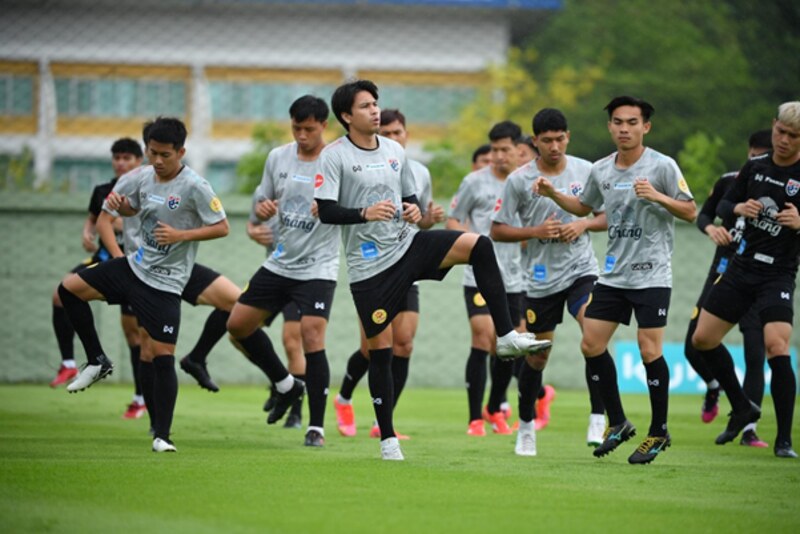
After a sleepy provincial capital, Bangkok seems like a seething cauldron. Here, youth football has become part of the city’s parental logistics. After-school training, weekend tournaments, individual sessions, English coaches, Japanese camps, and trial days in the club system. Sometimes a child gets more time than an adult office worker.
Bangkok FC Academy calls itself the academy and community program of professional club Bangkok FC, which plays in Thailand’s second division. The program accepts children aged 5 to 18 and offers a path from entry-level to preparation for professional football. The age range itself is important. A five-year-old doesn’t come for a career. They come to develop a familiarity with the ball and develop their skills. A 15-16-year-old is already testing their contact skills, decision-making speed, and ability to cope with the pace of a tournament.
Bangkok academies have a strong environment. It’s easier to assemble a coaching staff, find opponents, and organize an international mini-tournament there. The BIYFF 7’s, held in February 2026 at KMITL University Bangkok, included age groups U8, U9, U10, U11, U12, U14, U16, and U18. Events like these instill in children the basic instincts of being a professional in just a few days. You have to gain experience on the fly. The boys learn to sit on the bench for hours waiting for their chance, to unravel the opponent’s tactics in ten minutes, to cope with blind refereeing, and to overcome the language barrier right during playoffs. True, Bangkok does have a weak spot. An overly comfortable ecosystem sometimes pats players on the head instead of toughening them up. There are many training options, but little yard violence. A good academy should maintain technique and then add a level of resistance that can’t be bought in a monthly package.
Club academies: Buriram, Muangthong, and a provincial thirst for adult football
A club academy differs from a private school by a simple question: can a teenager one day make it into the senior team? In Thailand, this answer is most clearly expressed in Buriram. After the 2025 exchange trip, FC Augsburg reported that around 160 talented players aged 11-19 are studying at the Buriram United academy. The club’s goal is to integrate as many players as possible into the first team. This practice creates a powerful social lift. And for fans ready to monetize their knowledge of young talent, melbet register will be the first step to betting on the kingdom’s youth leagues. The profile creation process is optimized for mobile screens and takes about a minute, allowing you to instantly transition from academy analysis to gameplay.
Buriram is interesting not for its showcase, but for its routine. German coaches who worked at joint camps with Buriram Soccer School in Bangkok and Buriram noted the local boys’ excellent physical fitness and emphasis on conditioning. Three training camps brought together approximately 60 children aged 6-14, who were introduced to FC Augsburg’s methodology. Such exchanges are useful when they involve more than just photos with logos. Thai coaches don’t need a copy of Germany; they need tools: microcycle planning, cognitive load management, small-space structure, and player development analysis.
Muangthong United Academy launched a summer program for players aged 7-15 with the club’s professional coaches in 2026. The advert lists two camps in March-April, priced at 3,500 baht per week, with an emphasis on technique, tactics, physical development, and game thinking. For the mass system, paid camps have a dual effect. They improve the quality of training for those enrolled. At the same time, they serve as a reminder that access to high-level training remains a social filter.
Club academies must address three issues:
- produce players for their own first (adult) team;
- do not turn recruitment into a paid children’s section without competitive testing;
- maintain contact with schools to ensure that teenagers don’t have to choose between studies and training too early.
Thailand especially needs this third point. Asian football is replete with stories of talented 14-year-olds who become local stars, only to disappear due to family, money, relocation, or simple fatigue.
Major tournaments: when sponsorship money works to find children
In 2026, the Coke Cup U17 Thailand Football Championship bid became a strong indicator. The tournament, organized in partnership with the Thai FA, brings together 192 youth teams from six regional zones. It runs from May to August and includes over 200 matches. The winner receives a prize of 1 million baht, while the finalist receives 500,000. A separate section provides training for 192 players from the regions at the Thai U17 national team headquarters.
The 192 teams provide a regional scouting program. The Federation considers not only those already in the club system, as the regulations allow for academies at Thai League clubs, as well as school and college teams that meet licensing requirements. It’s also worth noting that teams without a previous academy license have a separate, free registration program.
Grassroots football needs high-profile tournaments for a simple reason: a scout won’t travel to every district just because of a rumor about a fast left-hander. When a regional zone attracts dozens of teams, the selection process becomes economical. One day, many matches, different styles, coaches nearby, and medical services on-site. In such an environment, a kid from a small school has the chance to be noticed without personal connections.