
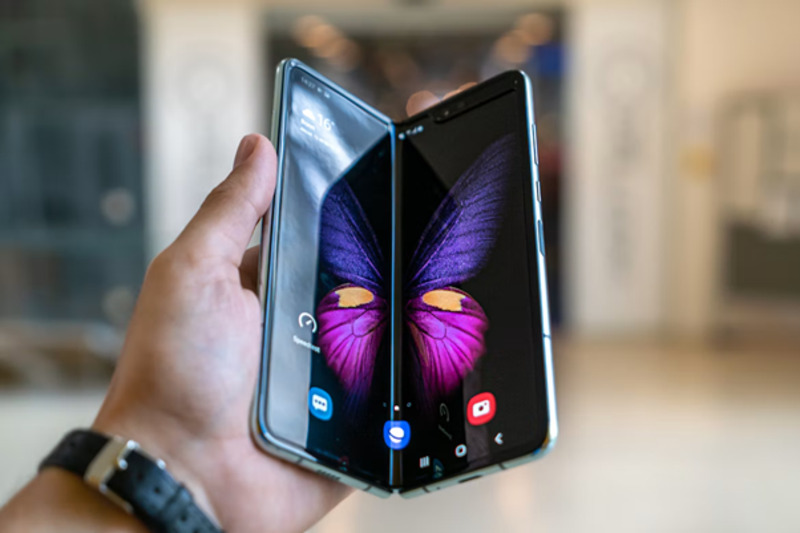
Foldable phones are a bit niche. Whenever you see someone with a foldable phone, you can’t help but look at it and think about how random the concept actually is.
They evolved by selling themselves mainly on the idea that you could open them and suddenly have a tablet-sized screen in your pocket. Gaming was a nice extra, but that’s changing as the hardware gets more powerful and software starts making better use of those strange screen sizes.
The Galaxy Z Fold8, for example, now runs Qualcomm’s Snapdragon 8 Elite Gen 5, and other recent foldables are using similarly high-end hardware.
Yes, they aren’t dedicated gaming phones, but some get surprisingly close when you actually start playing. Read on to find out how.
How Good Are Foldable Phones for Gaming?
Foldable phones are pretty good for gaming, depending on the game.
Android Authority found the Galaxy Z Fold8 could run demanding titles such as War Thunder and GRID Legends smoothly in real-world testing, even though stress tests showed much heavier throttling under prolonged GPU loads.
The bigger attraction is the screen. Open the book-style foldable, and games feel much more expansive and realistic, closer to console or PC gaming. Strategy games, card games, and anything with a lot happening around the edges like the titles at popular online casino South Africa sites can benefit from that extra space. That said, some shooters and action games do feel slightly odd on a squarer display.
How Foldable Phones Are Being Redesigned for Gaming
Here are some of the best ways we’ve seen foldable phones redesigned for gaming.
Software Innovations
Software has probably been one of the bigger problems with foldable gaming. A game designed around a standard phone screen doesn’t automatically do what you want when it’s suddenly given a wide or almost-square display. You can get black bars, stretched interfaces, or controls appearing in ridiculous parts of the screen.
Android has been pushing developers towards more adaptive apps, with Android 16 changing how apps handle resizing, orientation, and large foldable screens. Google also provides specific guidance for developers building games that need to move between inner and outer displays.
Samsung has gone further on the Fold8 by letting users adjust app aspect ratios manually if a game doesn’t scale properly. Hearthstone is one example where changing the setting can unlock a more tablet-like view.
Fixing Thermal Issues
Foldables are thin, packed with hardware, and split by a hinge, so cooling isn’t easy.
Testing in 2026 found foldable phones can still struggle under sustained loads, with some devices overheating or throttling heavily during stress tests. The Z Fold8 can lose more than half of its initial performance in prolonged GPU testing, although normal gaming tends to be much less brutal.
Manufacturers are improving graphite cooling, chip efficiency, and how heat spreads through the chassis, but dedicated gaming phones still have plenty of room to improve.
Displays and Ergonomics
The Fold8 uses a wider 4:3 inner display, and reviews have found games and cutscenes scale better than on some older, almost-square foldables. Retro games can look particularly good because older 4:3 titles can use nearly the entire screen.
Holding one is also difficult. A giant unfolded phone isn’t always as comfortable for fast touchscreen gaming, especially if important controls sit near the middle of the display or your thumbs have to stretch further than normal.
Foldable Phones Compared to Dedicated Gaming Phones
Dedicated gaming phones are obviously still better.
The REDMAGIC 11 Pro is one of this year’s top-rated gaming phones. It has a 7,500mAh battery, a 144Hz display, a 24,000 RPM cooling fan, liquid cooling, and 520Hz shoulder triggers. It’s an elite gaming phone, and a foldable phone will simply never compete with a device like that.
Foldables are trying to do everything at once. They need:
- Good cameras
- Thin bodies
- Hinges
- Two displays
- Normal everyday usability
So they’re not replacing dedicated gaming phones yet. But if you want one device that works like a normal phone, opens into a much bigger gaming screen, and still has flagship-level performance, foldables make far more sense for gaming in 2026 than they did even a few years ago.