

In sports betting, the biggest arguments rarely start with a bad pick—they start with a bet that looked like a winner until a stat correction, a VAR check, or a settlement rule flipped the result. That’s why smart bettors learn the house rules before they learn the odds. Whether you’re using a book on desktop or placing bets through Betwinner RDC télécharger, the real difference between “paid” and “pending dispute” is often hidden in the operator’s settlement policy, the sport’s official records, and the timing of updates from data providers.
“Official Result” Comes First: What Sportsbooks Actually Settle On
Sportsbooks don’t settle on vibes, TV commentary, or what your friend swears happened. They settle on “official results” as recorded by the governing body (league, federation, or event organizer) and distributed through official channels and data feeds. That sounds simple—until you see how many things can change after the final whistle: goals reassigned, red cards rescinded, match clocks corrected, or a competition later declaring a match void.
Introduction to this section
To handle disputes consistently, books define a settlement hierarchy: official governing body records first, then approved statistical providers, then internal risk controls. If any of those sources updates the result, the book may adjust the settlement.
- Key idea: A sportsbook can pay early, but it may later reverse or regrade if the “official” record changes.
- Timing matters: Many operators apply a “reasonable correction window” for obvious errors (like a goal credited to the wrong player).
- Scope matters: Some markets are tied to match result only; others rely on granular stats (shots on target, corners, cards).
Conclusion for this section
If you want fewer surprises, treat “official result” as the final authority and assume that stats-based markets are only as stable as the league’s stat audit process.
Transfers and Post-Match Changes: When the Event Itself Gets Rewritten
A lot of confusion comes from the word “transfer.” In betting disputes, people use it to mean three different things: (1) a wager transferred into a void/return status, (2) a stake transferred back to balance, or (3) an outcome transferred from win to loss due to a correction. Operators don’t see “transfer” as a special category; they see it as settlement states—won, lost, void (return), half-won/half-lost, or regraded.
Introduction to this section
Post-match changes usually fall into two buckets: disciplinary/administrative decisions (like a match later awarded 3–0) and statistical corrections (like a goal scorer reassignment). Sportsbooks often treat these buckets differently, because one changes the competition outcome and the other changes only derived stats.
Settlement practice by change type (table)
| Change type | Typical example | Usually affects which markets? | Common settlement action |
| Statistical correction | Goal scorer corrected; corner count adjusted | Player props, corners/cards, some specials | Regrade relevant markets if within correction policy |
| VAR decision (in-game) | Goal overturned; penalty awarded | Any market impacted by the incident | Settle based on final official match facts |
| Administrative decision | Match awarded/abandoned; replay ordered | Often match result and related markets | Void/return or regrade per operator rules |
| Data feed error | Provider posted wrong score briefly | Markets settled incorrectly early | Re-open and regrade to align with official record |
Conclusion for this section
The safest mental model is this: if the governing body’s final record changes, your settlement can change—especially for stat-driven markets. “Transfers” are usually just the visible balance movements that follow a regrade or a return.
Returns and Voids: The Most Misunderstood Outcome State
“Return” is bettor slang for “I got my stake back,” but books usually label it void. A void bet means the selection is treated as if it never existed for settlement purposes: stake returned, no profit, and in parlays the leg is removed or treated as neutral (depending on the operator’s rules).
Introduction to this section
Returns happen for reasons that are predictable if you know what to look for: match abandonment, wrong market parameters, non-runner rules, incorrect start time, or a bet placed on an obviously wrong price that the operator later voids as an error.
Here are common triggers for a void/return:
- Event not completed: If a match is abandoned and not completed within the operator’s defined timeframe, certain markets may be voided.
- Non-participation: If a player never enters the game, many player-related markets are void (but not all—read the market terms).
- Market misconfiguration: Wrong team listed, wrong handicap, incorrect match time.
- Duplicate/invalid events: A listing created twice or tied to the wrong competition.
Conclusion for this section
A return isn’t “a push that feels unfair.” It’s the book’s standardized way to unwind a wager when the market can’t be settled cleanly under the published rules.
VAR Situations: What Counts, What Doesn’t, and Why Timing Creates Disputes
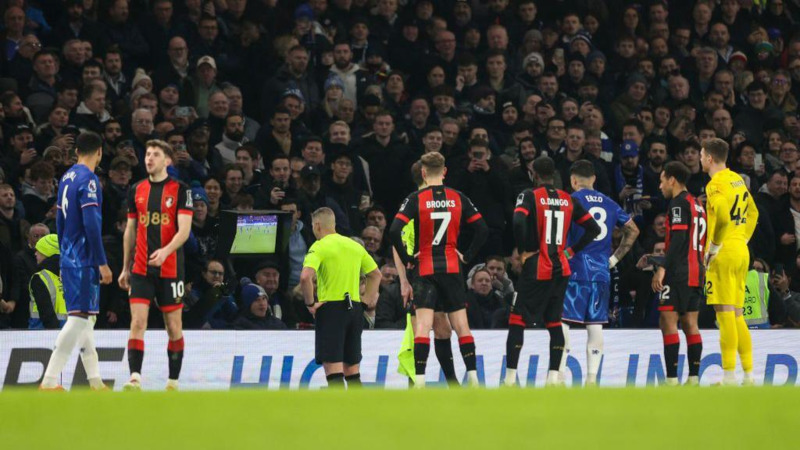
VAR is great for accuracy and terrible for instant gratification. The moment that triggers most disputes is the “celebration goal” that gets overturned, or a penalty that’s awarded after the live market has already moved. Bettors often assume the first on-screen decision is binding. Sportsbooks assume the opposite: only the final, official match facts count.
Introduction to this section
VAR affects settlement because it changes “match facts” after the initial observation. Books typically settle based on the final scoreboard and official incident log (goals, cards, penalties) rather than what appeared live for a few seconds.
Common VAR dispute moments:
- Goal overturned for offside/foul: Any market tied to that goal (team total, match odds, next goal) may flip.
- Penalty awarded after review: Shot, foul, or handball interpretations can shift totals and props.
- Red card upgraded/downgraded: Cards markets can change if the final disciplinary record differs.
- Added time adjustments: Rarely matters for settlement unless a league’s clock/period rules affect a “time of goal” market.
Conclusion for this section
If you bet live, treat VAR like weather: it can change quickly and it’s outside your control. The only stable reference is what the competition records at full time.
How to Dispute a Settlement Without Wasting Your Time
When a bet settles “wrong” in your eyes, the fastest route isn’t anger—it’s evidence. Most disputes fail because the bettor sends a screenshot of the broadcast. Most disputes succeed when the bettor cites the market rules and the official record.
Introduction to this section
A clean dispute message includes the event, bet ID, market name, and what source proves the correct settlement. Your goal is to make it easy for support to verify and escalate.
Use this checklist:
- Bet slip details: Bet ID, event name, kickoff time, market, selection, odds, stake.
- Exact dispute point: “Settled as loss, should be void because player did not participate,” or “Corner count corrected to X in official match report.”
- Official proof: League match report, official stats page, or an approved data source.
- Screenshots as backup: Helpful, but not your main evidence.
Conclusion for this section
Books are built to follow rules, not arguments. If you match your complaint to the operator’s settlement wording and the official record, you’ll get a faster and cleaner resolution.
The Practical Takeaways Bettors Can Use Before They Click “Place Bet”
Disputed outcomes aren’t random—they follow patterns. The same “unfair” feeling shows up when you bet stat props in leagues known for late stat audits, or when you play live markets in matches with frequent VAR checks.
Introduction to this section
This section is about prevention: small habits that reduce settlement friction and help you spot markets most likely to be regraded or returned.
- Prefer match result markets over fragile micro-stats if you hate corrections.
- For props, check whether the market references official stats or “as shown on TV.”
- Know the operator’s definitions for void, abandoned, postponed, and replay.
- In live betting, assume a goal is not fully “real” until play restarts and VAR is cleared.
Conclusion for this section
If you treat settlement rules as part of the odds, you’ll place fewer bets that depend on shaky inputs—and you’ll spend less time arguing about what “should have counted.”